
Staying on the Right Track: Lessons from Pixar’s Cars
“Always dream and shoot higher than you know you can do. Do not bother just to be better than your contemporaries or predecessors. Try to be better than yourself.”
― William Faulkner
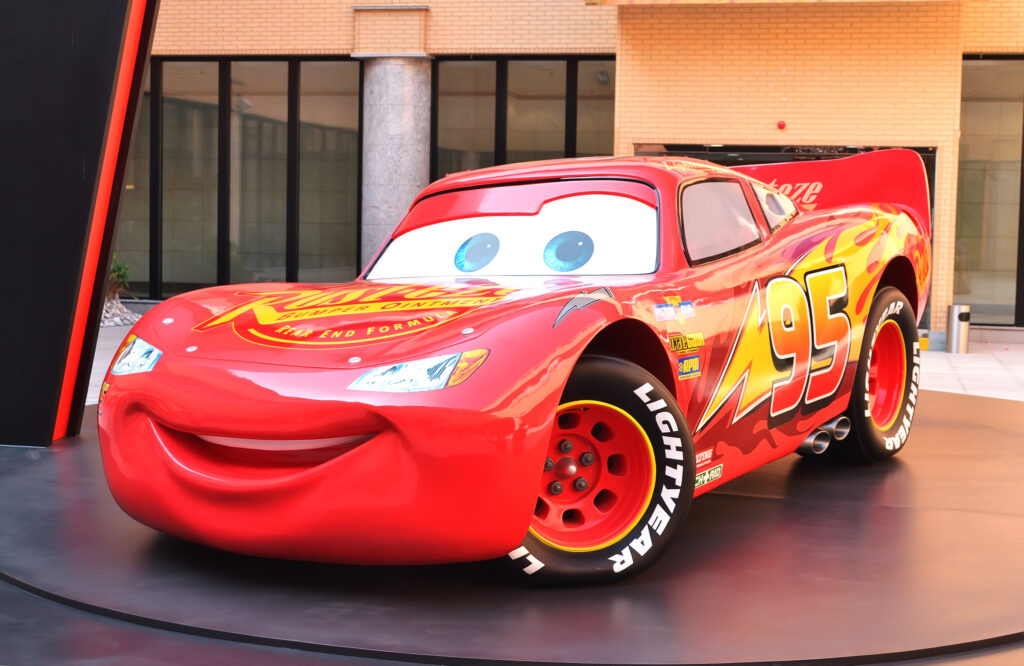
Movie Recommendation – Cars (Pixar Films, 6/9/2006 Release Date)
Finding What Matters Most to the Patient in Front of You
Every great physical therapist develops a set of “soft skills” that complement their technical expertise — the ability to listen, connect, and understand what truly matters to each patient. In our clinic, one of the best examples of this is Luke, a PT who serves as an outstanding mentor to our orthopedic physical therapy resident. Luke has a remarkable ability to quickly uncover each patient’s motivation and interests, building trust and connection in ways that elevate every treatment session. Just last week, I overheard him enthusiastically discussing quilting and quilting machines with a patient, a conversation that, while unexpected, clearly strengthened their therapeutic alliance. I joined the conversation and now know that, for $1,400.00, the Juki™ HZL-F600 Computerized Sewing and Quilting Machine rocks, as opposed to just being “sew-sew.”
Like Luke, many of us, as physical therapists, have go-to topics that help patients open up and share their stories. For me, those topics are nature, movies, music, and classic cars, which brings me to this blog post and to one of my favorite Pixar films, Cars.
My two favorite classic cars have always been the black 1963 split-window Corvette Stingray and the 1968 Ford Mustang GT featured in Steve McQueen’s Bullitt. The legendary eleven-minute car chase from that film still stands as one of the most iconic ever filmed. So, it’s not surprising that one of my favorite Father’s Day memories dates to 2006, when my dad, my three-year-old son, and I spent the weekend watching Cars in the theater and then attending a classic car show at the local fairgrounds.
While preparing to write this post, I revisited Pixar’s own vision statement: “At Pixar, our goal is to make great films with great people.” A simple statement and a powerful example of where “less is more.”
What I’ve always loved about Cars, like so many Pixar films, is its ability to speak to multiple generations at once with insight. Beneath the humor and racing action are layers of meaning about growth, humility, and purpose. In this blog post, I’d like to explore how some of these themes mirror our professional journey as physical therapists, and how they can help us reflect on what it truly means to be better clinicians.
The Danger of Overconfidence
At the start of Cars, Lightning McQueen embodies overconfidence. He trusts his instincts, dismisses feedback, and resists learning from others. His focus is entirely on winning races, rather than on process or growth. Physical therapists can fall into similar patterns when we rely too heavily on experience or reputation at the expense of current evidence. Clinical confidence is essential, but without reflection and openness to new research, it can turn into complacency. Ego-based and eminence-based practice, where authority or habit outweighs data, can limit professional growth and compromise patient outcomes.
The Value of Reflection and Reconnection
When McQueen is unexpectedly stranded in Radiator Springs, he is forced to slow down both literally and figuratively. In Radiator Springs, he rediscovers the value of community, mentorship, and intentional learning. The town becomes a metaphor for professional recalibration, in other words, a place to reconnect with one’s purpose. In physical therapy, this mirrors the process of stepping back to evaluate one’s clinical reasoning and ensuring that interventions are patient-centered, outcome-driven, and grounded in evidence rather than routine. Taking the time to reflect, learn, and listen, like McQueen does in the movie, allows clinicians to refine their approach and improve the quality of care.
The Art of Adaptation – Doc Hudson, aka, The Hudson Hornet
Doc Hudson’s story is one of wisdom and humility. Once a celebrated racer, he was sidelined by injury and change. Rather than becoming bitter, he redirected his knowledge toward mentorship, helping others succeed where he could no longer compete. This transformation reflects the professional maturity that physical therapists must embrace. Medicine, movement science, and technology evolve quickly. Adaptation and lifelong learning are not optional; they are professional imperatives. Holding onto outdated techniques, emotionally driven treatment philosophies, or social media trends in place of validated evidence can stall both patient progress and clinician development.
Letting Go of Ego to Embrace Evidence
By the film’s conclusion, McQueen learns that success is not defined by speed or self-promotion but by integrity, teamwork, and consistent effort. Similarly, physical therapists must prioritize evidence-based practice over ego or anecdote. Evidence-based medicine asks us to integrate three essential elements:
- The best available research
- Clinical expertise
- The patient’s unique goals and values
True fidelity in physical therapy means being faithful to this triad, not to personal bias, social media influence, or tradition. We must also remember that this integration of evidence is a funnel, not a three-legged stool.
The Power of Intellectual Humility
A valuable yet often overlooked professional trait in medicine is intellectual humility. This is the recognition that one’s knowledge is always partial, evolving, and open to revision. In physical therapy, this means being willing to question one’s assumptions, revisit once-accepted techniques, and engage respectfully with differing viewpoints. Intellectual humility does not weaken authority; it strengthens credibility. It creates space for collaboration, continuous learning, and innovation. As research and clinical paradigms shift, the PT who can say, “I might have been wrong, and I’m willing to learn,” demonstrates not uncertainty but courage. Like McQueen learning from Doc Hudson and his Radiator Springs community, true growth occurs when we replace certainty with curiosity.
A Legacy of Purpose and Mentorship
Sally Carrera and Doc Hudson are the film’s two deuteragonists. It was Greek to me, and I had to look it up. It’s essential to recognize that Cars was the final film role of Paul Newman, who voiced Doc Hudson. Newman’s decision to join the project wasn’t about celebrity or nostalgia; it was about meaning. A lifelong racer himself, he connected with Doc’s story of transition from champion to mentor, from ego to purpose. In many ways, Newman’s own life paralleled this theme: he found fulfillment not just in competing, but in teaching, guiding, and giving back. His involvement reminds us that true professional maturity, whether in racing or physical therapy, comes when skill is paired with humility and a desire to lift others along the way.
The Road Ahead
The story of Cars reminds us that growth requires humility. To remain effective, relevant, and compassionate, physical therapists must continually refine their clinical practice. We must question what we do, why we do it, and how we can do it better. As McQueen learned to slow down, listen, and evolve, so too must we commit to reflection, mentorship, and evidence-informed decision-making. The open road of our profession is filled with challenges and change. Still, by maintaining curiosity, compassion, and a commitment to learning, we can continue to move forward, not just faster, but wiser. “Ka-Chow!”
More reading
- Cook C. Emotional-based practice. J Man Manip Ther. May 2011;19(2):63–5. doi:10.1179/106698111X12973307659582
- Kelly JD. Your Best Life: Humility – A Key Virtue for Inner Peace. Clin Orthop Relat Res. Jun 1 2025;483(6):1004–1006. doi:10.1097/CORR.0000000000003499
- Meira E. Understanding evidence-based medicine using a funnel analogy. 2020;doi:10.31236/osf.io/kr6aq
- Schwab SM, Silva PL. Intellectual Humility: How Recognizing the Fallibility of Our Beliefs and Owning Our Limits May Create a Better Relationship Between the Physical Therapy Profession and Disability. Phys Ther. Aug 1 2023;103(8)doi:10.1093/ptj/pzad056
About the Author

J.W. Matheson is a physical therapist with 30 years of experience and a growing passion for making science accessible to everyday people. Over the years, he’s learned that physical therapy—and the research behind it—isn’t the neat, airtight world textbooks promise. Musculoskeletal pain science is messy, flawed, and deeply human, just like the people it aims to help.
While many talk about “evidence-based” practice, J.W. leans toward science-based practice—grounded in the best available research, scientific reasoning, healthy skepticism, solid methodology, and an understanding of where the evidence falls short. Once a fiery debater on social media, J.W. found that arguing rarely changes minds. Now, he’s more interested in listening than lecturing, asking better questions than delivering quick answers. He believes the best PTs aren’t the ones who are always “right,” but the ones who stay open, curious, and compassionate in the face of uncertainty. Through his writing, J.W. invites others to explore the gray areas of healthcare, where humility meets science—and where true progress happens.
Featured image: ID 105171186 © Patrickmak039 | Dreamstime.com